


Pocket Mine 2
4.32.42K Reviews
App Specs
- Version
- 6.10.0
- Updated On
- License
- Free
- Downloads
- 1,000,000+
- Developer
- Roofdog Games
- Categories
- Arcade
- Platform
- Android
Screenshots

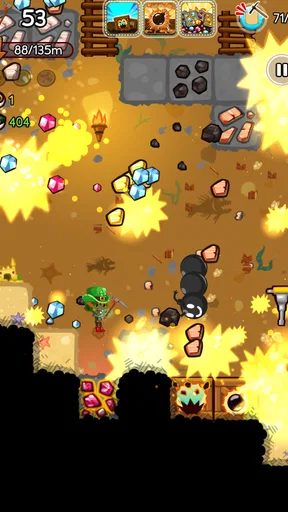
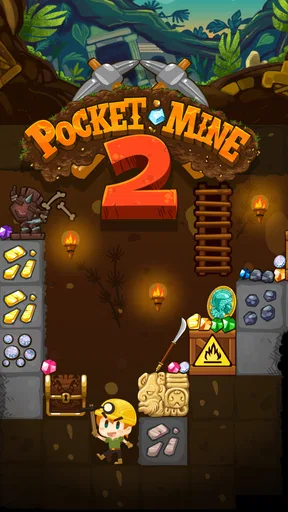
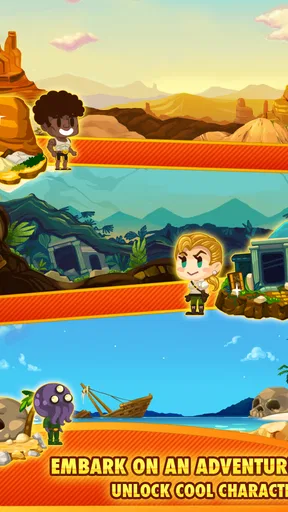
 Analysis by AppCompare
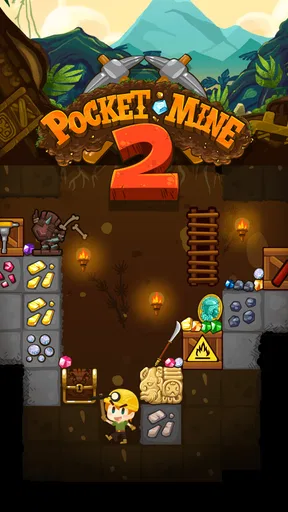
I came to Pocket Mine 2 expecting a simple arcade time-killer, but its digging loop has more texture than the name suggests. I tap through blocks, push downward, collect what I uncover, and decide how aggressively to continue before a run becomes awkward or unproductive. That basic rhythm makes it easy to start during a short break, while the island-based progression gives me a reason to return when I have more time.
Developed by Roofdog Games, this free arcade game is aimed at Teen players and has built a substantial audience, with over a million installs and a 4.3 average from around 67 thousand ratings. Those figures do not automatically make a game enjoyable, of course, but they match my impression that this is a polished, established mobile experience rather than a tiny experiment. The current version is 6.10.0, and it runs on Android 6.0 or later.
How the digging works when the device is shared
The most useful way I found to understand Pocket Mine 2 is as a game that fits naturally into shared-device life. Imagine a tablet in a kitchen or living room: one person plays for a few minutes while waiting for dinner, another picks it up later, and someone else watches the screen and suggests which direction to take. The controls are simple enough for a bystander to understand immediately, so it can become a small group activity even though the game itself is played by one person at a time.
That simplicity is also why I would not describe it as a traditional multiplayer game. I did not treat it as a place for several household members to maintain a shared live session. Instead, the social value comes from taking turns, discussing choices, and handing over the device. If your household wants direct cooperation, competitive matches, or a clearly separated profile for every player, this is not the right kind of arcade experience.
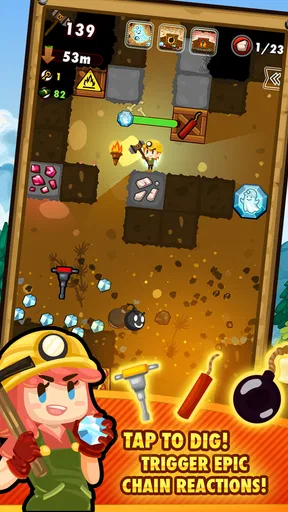
The central action is deliberately tactile. I tap blocks to dig, watch the route open, and react to what appears below. The satisfaction comes from turning a solid screen into a path and seeing whether the next move creates a better opportunity. It is less about mastering complicated controls and more about making a series of small decisions without losing the relaxed flow.
For a short session, I can play without needing a long explanation. That makes it suitable for a shared phone where the owner wants to let a younger relative try it briefly, or for a family tablet passed around during a quiet evening. The Teen content rating still matters, though: I would check the screen myself before treating it as an automatic choice for children.
The first session is easy, but the long-term loop needs patience
The opening experience is approachable because the interaction is so direct. There is no need to learn a large control scheme before doing anything useful. Tapping blocks feels natural on a touchscreen, and the visual response gives immediate feedback. That makes the game welcoming for people who do not normally play action games on mobile.
Worth Reading Before You Choose

EA SPORTS FC Mobile 26 Is a Bigger Football Game, but It Takes Time

Flipboard Shows What News Apps Must Do Beyond the Feed

Switching to Android Auto Means Rethinking Your Driving Routine

Google Calendar Makes a Crowded Week Easier to Manage

Ludo King Makes the Most of the Minutes Between Plans

Baby Panda World Brings Quick Play to Modern Phones, but Its Game Library Feels Busy
After the novelty of the first digging runs fades, the appeal depends on whether you enjoy incremental progress. The game asks me to value gradual discovery rather than instant spectacle. I return because I want to see more of the world and improve the quality of future runs, not because every session delivers a completely new type of challenge.
This distinction is important in a household. A person who likes steady collecting and repeated attempts may happily play for weeks. Someone who wants a clear ending, a story-heavy campaign, or fast competitive rounds may lose interest sooner. I would introduce it as a calm arcade game with a persistent sense of discovery, not as a replacement for a console adventure.
Setting boundaries before several people use it
Because the game is free and includes in-app purchases ranging from $1.49 to $29.99 per item, I would agree on purchase rules before putting it on a shared device. The practical issue is not the digging itself; it is making sure every person using the device understands whether spending is allowed. A child who assumes the game is entirely free may not recognize that optional purchases can sit alongside the normal play loop.
I would also decide who is responsible for progress. If several people use one device, a single game state can become confusing quickly. One player may spend time building a preferred approach, while another may tap through it without realizing what was being saved for later. The simplest household rule is to treat the game as belonging to one main player and let everyone else take turns only when that player is present.
That arrangement avoids a common shared-device problem: nobody knows whether a change was intentional. It also makes conversations about purchases much clearer. The owner can decide whether an item is worth buying, while occasional players can enjoy the free portion without assuming they are allowed to spend money or alter the established routine.
I would not install it on a device where children are expected to explore freely without adult guidance. The Teen rating is a useful signal to pay attention to the context, and the presence of optional purchases adds another reason to establish boundaries. This is not a criticism of the digging mechanics; it is simply sensible preparation for a game that may be used by more than one person.
Coordinating turns without turning play into a chore
The best shared sessions I had were informal. One person played while another watched for useful routes or commented on what had just appeared. Since the controls are tap-based, a spectator can understand the decision being made without needing to hold the device. That makes it easy to say, “Try that block first,” then hand the phone over when the run ends.
Still, I would avoid presenting every decision as a group vote. The fun depends partly on personal experimentation, and constant back-seat instructions can make a simple arcade game feel like a task. A better rhythm is to let the active player choose, then discuss the result afterward. That preserves ownership while giving the household something to talk about.
For younger or less experienced players, I found that explaining the goal in plain language works better than giving a detailed strategy lesson. Ask them what they want to discover, let them choose a direction, and use the next run to compare the outcome. The game’s accessible controls make this kind of coaching possible without taking over completely.
Short turns are especially useful on a shared phone. They reduce arguments about waiting and make it easier for someone to stop when another person needs the device. I would not promise an exact turn length because the natural stopping point depends on how a run develops, but agreeing on “one attempt each” is more practical than trying to divide the evening by minutes.
What makes the islands more than a background
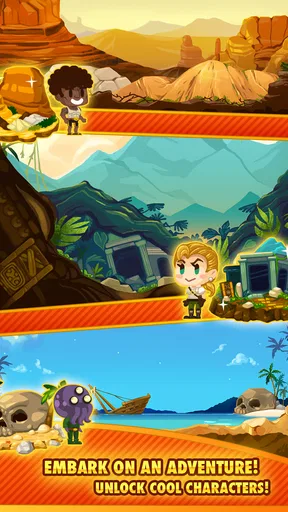
The island structure gives the game a sense of movement that a single endless digging screen would lack. Each new area suggests that there is more to uncover, and that feeling of traveling onward is what keeps the arcade loop from becoming completely repetitive. I like that the setting provides a reason to continue without forcing me into a complicated narrative.
My first non-obvious tip is to treat each run as information, not only as a hunt for immediate rewards. When I notice how a particular route develops, I can make a more deliberate choice on the next attempt instead of tapping randomly. That small change in mindset makes the game feel less like luck and more like a series of experiments.
A second useful habit is to resist playing every session at maximum speed. The controls invite rapid tapping, especially when I am trying to make progress quickly, but rushing can turn the route into a blur. On a shared device, slower play also helps spectators understand what is happening and gives a younger player time to make the decision personally.
My third tip is to separate discovery sessions from routine progress sessions. When I have only a few minutes, I focus on a straightforward run and stop without trying to optimize everything. When I have more time, I pay closer attention to the path and consider what I learned earlier. This prevents the game from feeling like an obligation and makes the longer sessions more purposeful.
Age, trust, and the right kind of supervision
The Teen rating means I would not frame Pocket Mine 2 as a universal children’s game. A family may still decide it is appropriate for a particular teenager, but that decision should come from the adults who know the player, not from the colorful arcade presentation alone. I would play alongside a younger user at least once, check whether the tone feels comfortable, and explain the purchase boundary before leaving the device with them.
There is also a trust question around progress. On a personal phone, losing or changing a run may be minor. On a shared tablet, it can create unnecessary conflict if one person believes the game is their private project. Clear expectations solve more than technical restrictions would in this situation: identify the main player, ask before spending, and do not reset or alter progress that belongs to someone else.
I would be particularly careful when the device is used by people with very different ages. A teenager may understand the game and the purchase model immediately, while a younger child may focus only on the appealing tapping. The safest approach is not to assume the same level of understanding from everyone. Let the younger player try it with an adult nearby and explain what the taps do before allowing unsupervised use.
For adults, the Teen label is not necessarily a reason to skip the game. It is better read as a prompt to consider whether the content and spending setup fit the intended player. The game’s straightforward controls can make it approachable, but approachability should not be confused with being designed for every age group.
How it compares with other arcade choices
Compared with an endless runner, Pocket Mine 2 feels less dependent on reflexes. I am not simply reacting to obstacles at high speed; I am shaping a route through blocks and thinking about what to do next. That makes it a better fit for relaxed play, spectators, and shared turn-taking, but a weaker choice for someone who wants constant movement and instant restarts.
Compared with a match-three game, the digging loop gives me a stronger sense of physical direction. I am moving downward through an environment rather than clearing a fixed board. The trade-off is that the progression can feel more repetitive if I do not enjoy repeated exploration. A match-three alternative may be better for a player who wants compact puzzles with a clearly visible board and quick pattern recognition.
Compared with a large adventure game, this is much easier to pick up and put down. I do not need to remember a complex story before a short session makes sense. The cost of that convenience is depth: players looking for elaborate characters, dramatic quests, or a broad action system should choose something more ambitious.
The free entry point is helpful for testing whether the loop suits you. I could try the core idea without paying first, which is exactly what I want from a casual mobile game. However, the optional purchases mean I would not call it a completely frictionless family recommendation. The game works best when the household agrees that spending is a deliberate choice rather than part of ordinary tapping.
Who should install it, and who should pass
I recommend it to players who enjoy exploration in small doses, incremental progress, and touch controls that make sense immediately. It is particularly good for someone who wants an arcade game that can fill a short wait without demanding full concentration from the first second. It also works well as a shared-device activity when one person plays and others comment or take turns.
I would be more cautious recommending it to people who dislike repetition or who need every session to introduce a new mechanic. The basic digging action remains the heart of the experience, so its appeal depends on enjoying variations within that loop. Players who prefer direct competition, deep strategy, or a fully separate profile for every household member should look elsewhere.
It is also not my first choice for a very young child. The Teen rating and in-app purchases make supervised use the sensible approach. For a teenager or adult who understands the boundaries, the game can be an easygoing option; for a child using a shared device independently, I would choose a title with a more clearly suitable age context.
My household verdict
After spending time with it, I see Pocket Mine 2 as a friendly, low-friction arcade game whose strongest feature is the way its digging loop invites curiosity without requiring a long setup. I can play alone, pass the device to someone else, or let a spectator suggest the next move. That flexibility gives it a genuine place in a household where phones and tablets are shared casually.
My recommendation comes with clear conditions: establish who owns the progress, agree on purchase rules, and treat the Teen rating seriously. Those steps are more important here than searching for a complicated family arrangement, because the main risks of shared use are confusion and accidental spending rather than difficult controls.
Roofdog Games has made a game that is easy to understand but not entirely disposable. The islands give the digging a destination, while the repeated runs reward patience and observation. I would install it for a teenager or adult who likes relaxed arcade discovery, especially if the device is sometimes passed around. I would skip it for a household seeking multiplayer teamwork, a young-child-first experience, or a game with no optional spending at all.
In the end, the best way to enjoy Pocket Mine 2 is to treat it as a personal arcade journey that can be shared socially, not as a shared account everyone edits freely. With that expectation, its simple tapping becomes a pleasant routine: quick enough for everyday gaps, interesting enough to revisit, and structured enough to give casual players a reason to keep exploring.
Pros
- Simple controls make mining easy to learn on mobile.
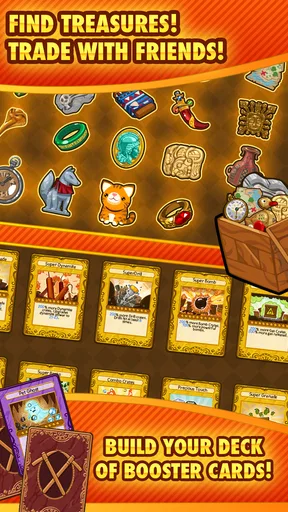
- Many collectible artifacts encourage exploration and replayability.
- Pet companions add useful bonuses and extra personality.
- Frequent treasure discoveries keep short play sessions rewarding.
- Colorful visuals run smoothly on most modern devices.
Cons
- Energy limits can interrupt longer mining sessions.
- Progress may feel slow without spending premium currency.
- Random layouts can make finding specific treasures frustrating.
- The interface can feel crowded with currencies and upgrade menus.
- Some events and rewards may require regular daily play.
FAQs for Pocket Mine 2
What is Pocket Mine 2, and how does the gameplay work?
Pocket Mine 2 is a casual mining adventure game in which you dig through underground areas, collect valuable resources, discover treasures, and use your earnings to improve your equipment. Each run encourages you to dig deeper while managing your tools and progress. The game combines simple tap-based controls with exploration, collectible cards, upgrades, and occasional challenges that keep the mining loop engaging.
Is Pocket Mine 2 free to download and play?
Pocket Mine 2 is generally free to download, so you can begin playing without paying an upfront purchase price. However, the game may include optional in-app purchases for resources, boosts, currency, or other benefits. These purchases are not normally required to experience the main gameplay, but progress can feel slower if you choose not to spend money. Parents should review device purchase settings before allowing children to play.
Does Pocket Mine 2 require an internet connection?
Some parts of Pocket Mine 2 may be playable without a constant internet connection, particularly the basic mining gameplay. Nevertheless, online access can be needed for advertisements, events, rewards, synchronization, updates, or certain connected features. Availability may also depend on the version installed and the device platform. If you plan to play while traveling, it is best to test the game offline beforehand.
Are there advertisements or in-app purchases in Pocket Mine 2?
Yes, Pocket Mine 2 may contain advertising and optional in-app purchases. Advertisements can sometimes be offered in exchange for extra rewards or may appear between activities, while purchases can provide additional currency, boosts, or convenience. The game remains accessible without spending money, but free players may need more patience when upgrading equipment and progressing through the deeper mining areas.
Is Pocket Mine 2 suitable for children and casual players?
Pocket Mine 2 is easy to understand and uses straightforward controls, making it suitable for casual players who enjoy short, progression-based gaming sessions. Its colorful presentation and non-violent mining theme can appeal to younger audiences, although parents should still check the store age rating and privacy details. Because the game may feature advertisements and optional purchases, parental controls are recommended for children.


